

Before exploring this page, I recommend reading "Learn More About the Location and Costs."
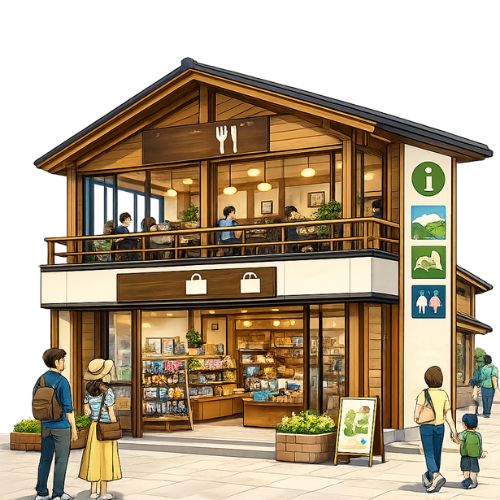
Wakaura Station is planned as an intermediate stop on the new railway line that would open together with the aquarium. While many historic shrines and temples are located nearby, there are relatively few souvenir shops and restaurants, and an increasing amount of land is currently used as parking lots. Why not take advantage of this situation by creating a tourist center with souvenir shops and restaurants on these sites? If built in the right location, visitors could even enjoy views of the hillside shrines and temples from the second floor.

Wakayama is one of Japan's leading producers of knitwear. Wakaura is located close to these manufacturing areas. Creating a shopping district where visitors can purchase locally made knitwear directly from retailers would attract local shoppers while encouraging healthy competition among stores. This could also help improve the design and appeal of Wakayama's knitwear.
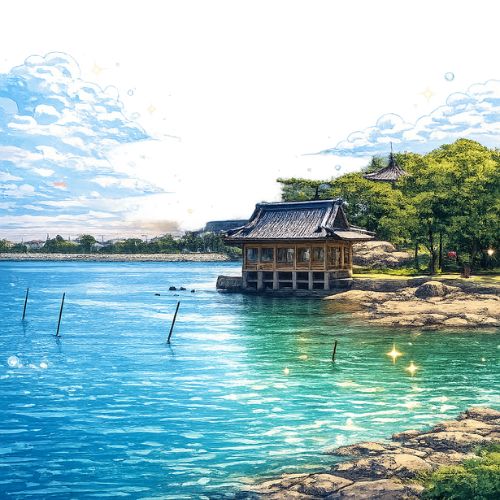
This illustration depicts one of Wakaura's most famous landscapes, admired since the Edo period. Although the scenery remains beautiful today, the surrounding area has become a densely built residential neighborhood. By combining flood-prevention measures with land elevation projects, a public park or traditional Japanese garden could be created where everyone can enjoy this historic view. Because this landscape belongs to the public rather than to any individual or company, it should be preserved and made accessible for everyone.

Wakaura is home to several fishing ports. While some ports currently host seafood restaurants on weekends, this alone would not be enough if railway access brings many more visitors. Establishing restaurants that operate throughout the year at each fishing port would allow visitors to enjoy fresh local seafood at any time. Rather than relying only on scenic beauty, Wakaura could become known as a destination for excellent seafood, creating a sustainable connection between tourism and the local fishing industry.
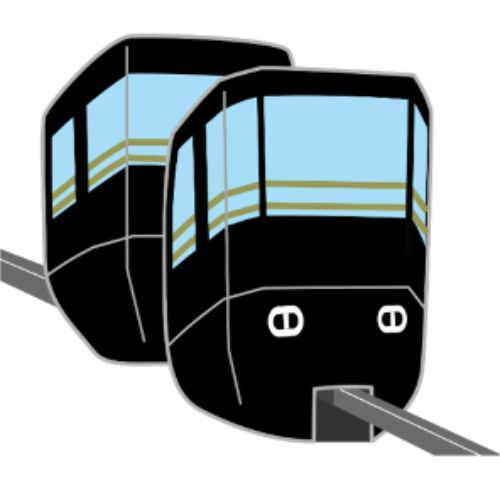
Wakaura was once served by a ropeway. One of the main reasons for its closure was poor accessibility. Since ropeways travel only in a straight line, it was difficult to connect the lower station with convenient transportation. A slope car—an inclined elevator capable of following curved routes— could instead connect the mountain summit directly with the new railway station. Because it can adapt to winding terrain, it would offer much better accessibility and attract more visitors than the former ropeway.
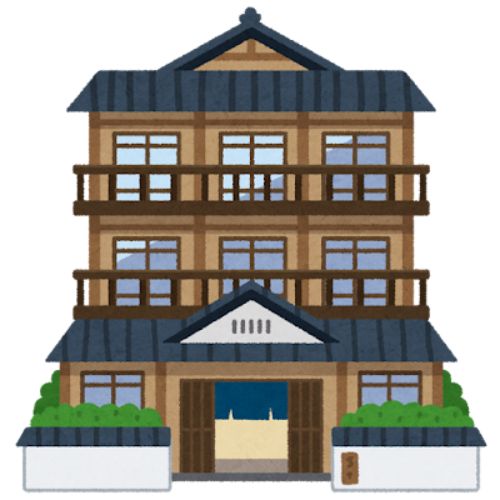
Wakaura was once famous throughout Japan as a honeymoon destination. Today, however, many of its traditional inns have closed and remain abandoned. With the arrival of a railway station and a new aquarium, interest in the area would increase dramatically. At that point, operators could be invited to renovate and reopen these historic inns. This approach would reduce abandoned buildings without requiring large public expenditures, while also improving the area's historic streetscape.
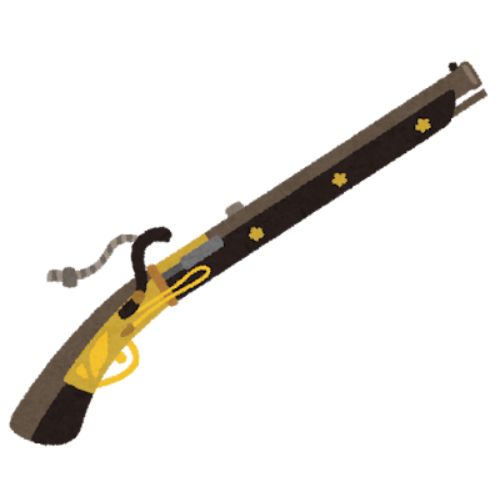
Wakaura is home to the ruins of Saika Castle, a medieval castle site. In fact, depending on how its cultural heritage is presented as a whole, it might even have the potential to become a World Heritage Site! The idea is to present it as part of a heritage framework featuring castles that represent medieval Japan. For more details, see the link below!
The area is also home to many historic temples and shrines, so it could attract even more attention as a center of cultural heritage.
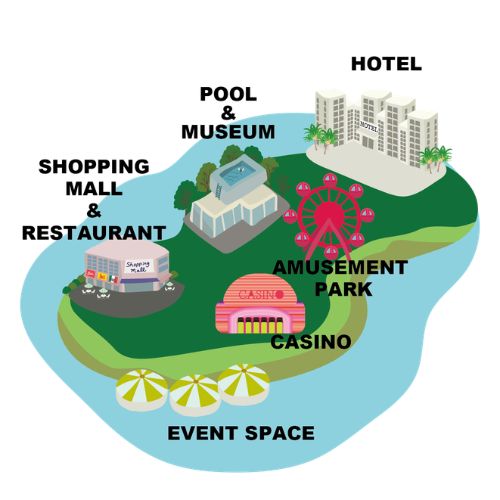
After the aquarium has enhanced Wakayama's image and the projects in the Wakaura area have become successful, it would be the ideal time to invite an Integrated Resort (IR). The key difference from previous proposals is that Wakaura would already have become a vibrant destination attracting visitors from around the world. Under those conditions, the risk of an IR having little positive impact on the surrounding community would be greatly reduced.
Kiraku
─ Japan Creator ─
"I want to bring exciting ideas and experiences to people across Japan."
Other projects by the creator
Added: September 2, 2026
Published: July 31, 2026
Uploaded: May 23, 2026